
Managed shortage of square meters: in "old" Moscow, the volume of new construction has halved.
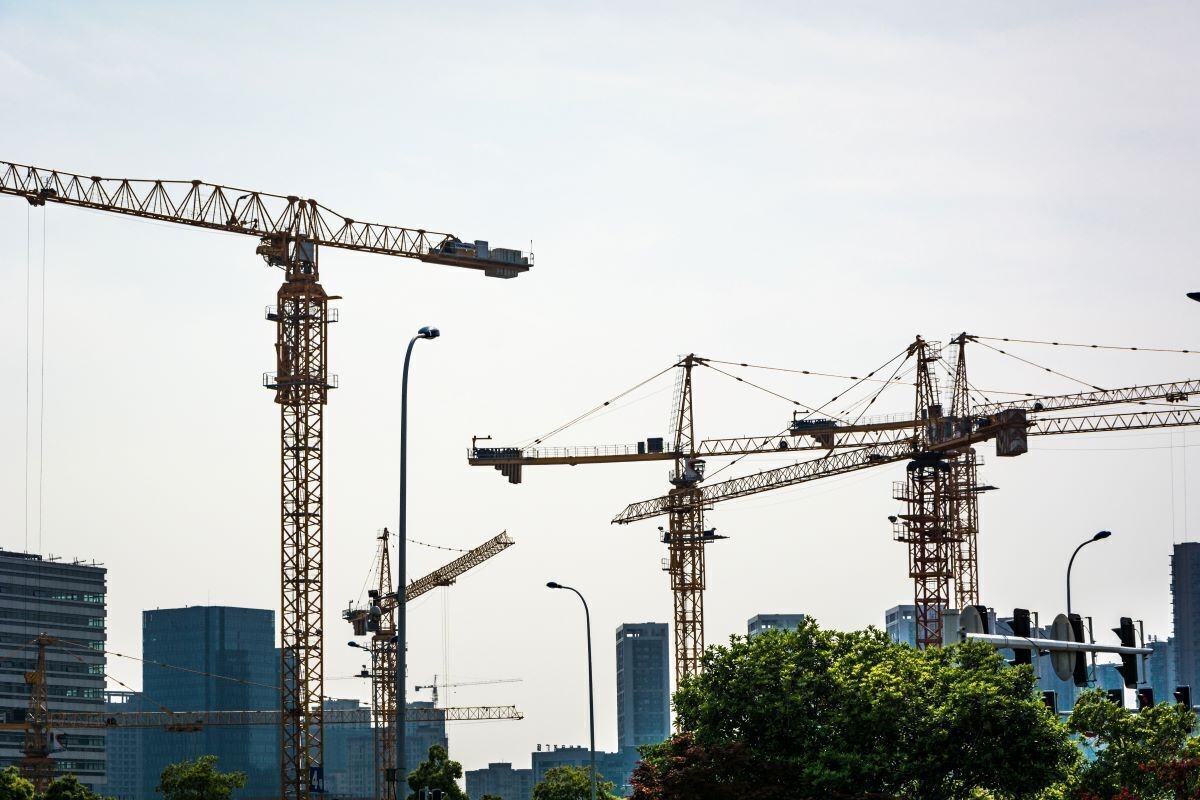
The primary residential real estate market in "old" Moscow is showing a steady decline in supply.
Based on the results of the third quarter of 2025, the primary residential real estate market in "old" Moscow is showing a steady decline in supply and rising prices, creating a manageable deficit. According to residential analysts at CORE.XP, only 49 buildings in 7 projects entered the market during the quarter, compared to 86 buildings in 14 projects a year earlier. Year-on-year, new construction volume has more than halved. Which districts of Moscow will drive demand in the near future?
test banner under the title image
As Ekaterina Lomteva, Director and Head of Residential Real Estate at CORE.XP, told MK, the average weighted asking price within the boundaries of "old" Moscow reached 712,238 rubles per square meter (+20% year-on-year and +0.3% quarter-on-quarter). In transactions, the average price was 559,638 rubles per square meter (+5% year-on-year and +2% quarter-on-quarter). However, the gap between the listing price and the actual transaction price remains high—up to 27%. The average lot size is 49.9 square meters.
According to the expert, the number of mortgage transactions increased by 58% compared to the same period last year and by 40% compared to the second quarter. The share of mortgages increased by 6 percentage points in both periods. From January to September 2025, preferential programs accounted for 59% of the number and 78% of the volume of all loans, with 19% of transactions using installment plans.
Nearly all Moscow districts are seeing a decline in inventory, with the overall market decline amounting to 12%. The leading regions with year-on-year declines are the South-Western Administrative District (-45%), South-Eastern Administrative District (-31%), North-Eastern Administrative District (-28%), and Eastern Administrative District (-18%). Meanwhile, a slight increase in supply is observed in the Western Administrative District (+19%) and Northern Administrative District (+4%). Against this backdrop, pent-up demand is beginning to form in locations with reduced supply and improved transport accessibility, where mortgage and installment plan programs are further fueling buyer activity.
Among the local demand clusters in the primary residential real estate market of "old" Moscow, the analyst noted the Eastern Administrative District, where inventory volume fell by 18%. In the Eastern Administrative District, there has been a structural shift toward "family" housing formats, with a reduction in the number of available lots with a minimum area.
In southeast Moscow, a decline in exposure (-31%) is occurring amid the redevelopment of industrial zones and the launch of landmark projects in the affordable business class. The Yuzhnoportovy district is the focus, forming a new center of business activity and a vibrant focal point in the city. The Northeastern Administrative District combines a balance of a "vertical city" and park corridors. Here, demand is concentrated around the large recreational areas of VDNKh and the Botanical Garden, which is accompanied by limited new project launches and a significant decline in exposure (-28%). Residential complexes are currently under construction in the district.
Traditionally popular with Muscovites, the southwest of the city is also experiencing a significant supply shortage. As of the third quarter of 2025, the primary market inventory declined 45% year-on-year. Demand is concentrated around the Obruchevsky district, where pent-up buyer interest is building.
Thus, against the backdrop of declining construction volumes and limited new projects entering the market in "old" Moscow, buyers' options are already significantly limited. Minimum budgets in the city's eastern and southeastern districts still range from 9.81–12.13 million rubles (Eastern Administrative District) to 20.9 million rubles (Southwestern Administrative District), but this gap is gradually narrowing.
"The 'old' Moscow market has entered a phase of managed deficit: with new building completions falling by more than half, we are seeing the most pronounced latent demand in the Eastern Administrative District (Bogorodskoye, Golyanovo), South-Eastern Administrative District (Yuzhnoportovy), North-Eastern Administrative District (near VDNKh and the Botanical Garden), and South-Western Administrative District (Obruchevsky)," Lomteva emphasized.
She predicts that the projects that will emerge as leaders are those that fit neatly into the location product matrix and create sought-after infrastructure already during the first stages of construction. "A rational strategy for buyers will be to lock in the price at the booking stage and use a combination of mortgage and installment plans, the share of which in transactions is consistently high today," the expert concluded.

Authors:

mk.ru